
The Trial of Festy King
Finnegans WakeThis flow traces Festy King's public prosecution through conflicting charges, theatrical testimony, and a courtroom that cannot stabilize truth.
increasing Bearing strength in each event
 decreasing
Bearing strength in each eventdecreasingThe Charges Are Read
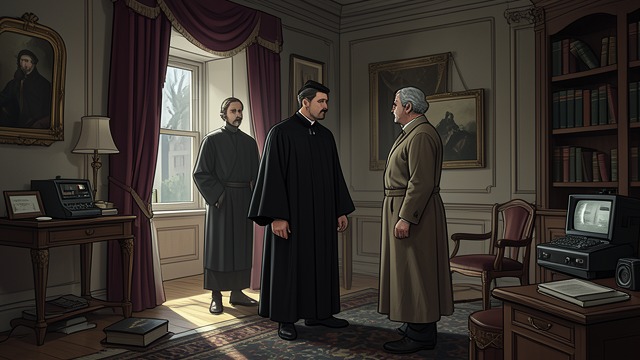
The Charges Are Read
A prisoner enters court
Festy King is brought before legal authority under accusations whose wording and scope shift.
The case is unstable from the start
The trial's premise is already tangled with impersonation and contested evidence.
The Defendant Tells His Story
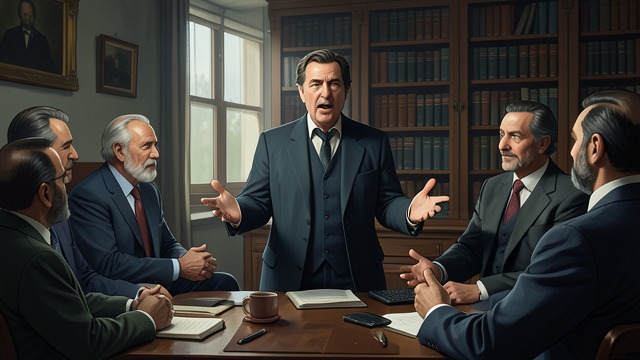
The Defendant Tells His Story
A version is offered
King explains his conduct and identity in language that complicates the prosecution's claim.
Speech becomes performance
His account is shaped for the courtroom audience as much as for the facts.
Witnesses Multiply the Doubt
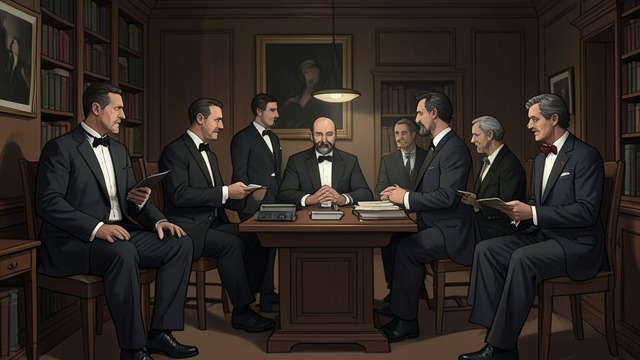
Witnesses Multiply the Doubt
Testimony conflicts
Witnesses introduce further names, circumstances, and possible interpretations of the alleged crime.
Legal procedure loses clarity
The more evidence appears, the less certain the case becomes.
The Court Becomes a Performance
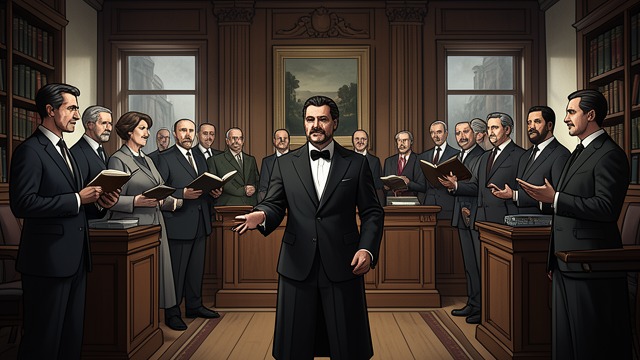
The Court Becomes a Performance
Roles overtake evidence
The defendant, officials, and audience each appear to perform parts in a larger public drama.
Judgment becomes unstable
The courtroom can stage authority without supplying a conclusive account.
The Verdict Leaves a Riddle
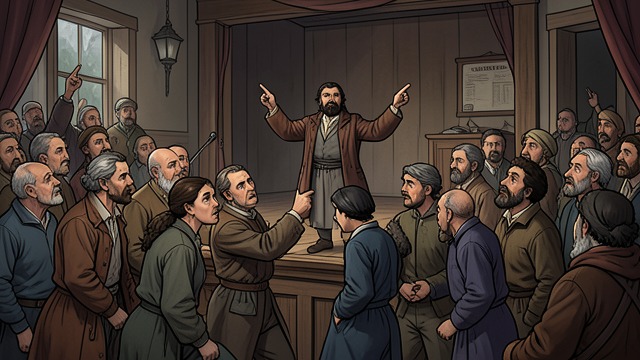
The Verdict Leaves a Riddle
Resolution remains comic and incomplete
The proceedings end without a simple, reliable moral outcome.
The case joins the cycle
The trial becomes another story that may be retold with different outcomes.
At the opening of the trial episode
During King's first courtroom account
During cross-examination
At the height of the testimony
At the end of the trial sequence
